What is gold leaf?
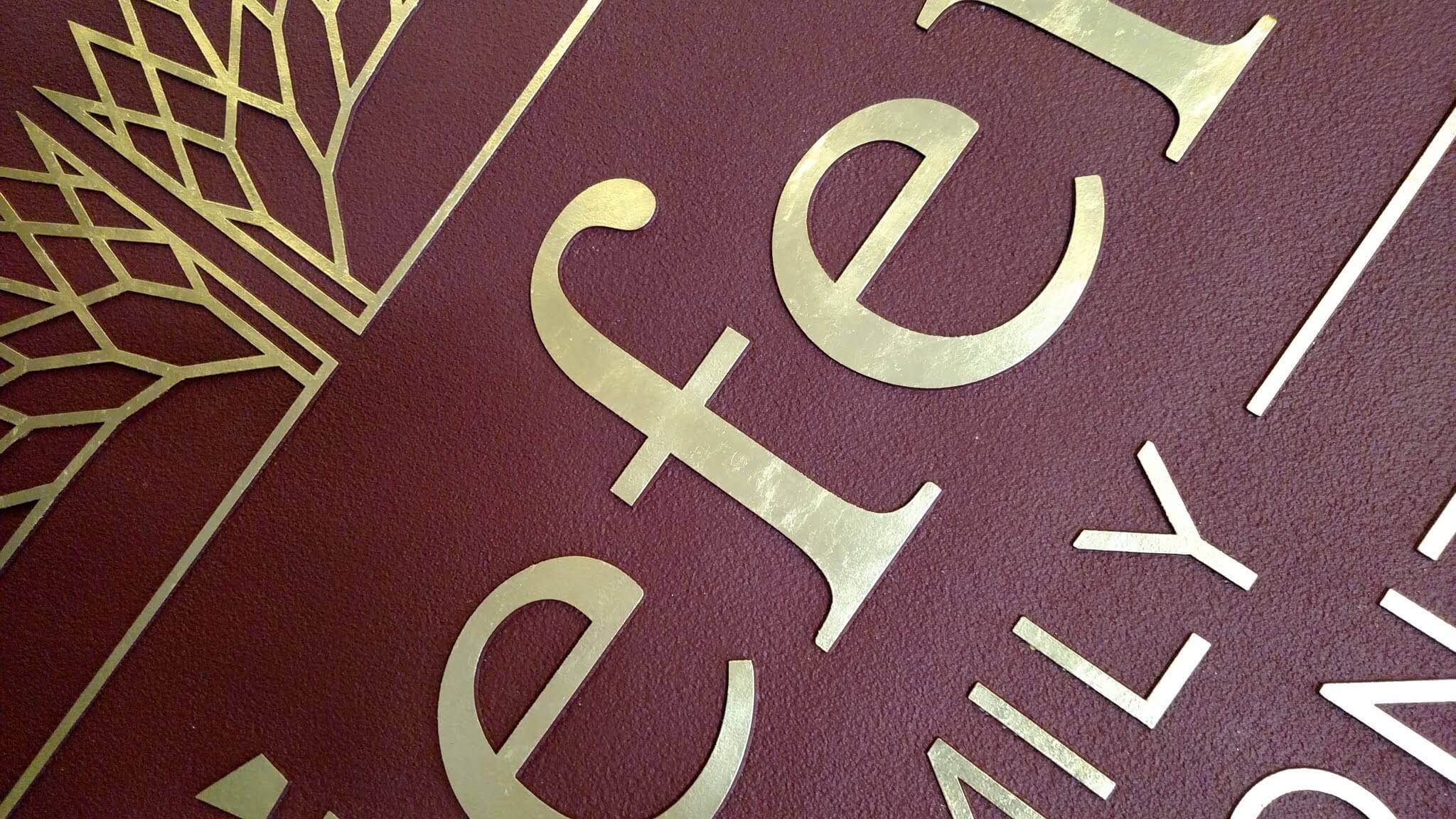
Gold leaf is real gold that has been beaten into extremely thin sheets. Artists and sign makers love it because it makes ordinary surfaces look special. You can use it to add a touch of elegance to carved letters, or a shimmering accent to glass.
Gold comes in many colors. Deep yellow gold is the classic choice, and we use 23 karat gold leaf for our signs and boards. Palladium leaf has a cool, silver look. Variegated leaf adds even more colors to a design. Each type of metal leaf has its own charm, so leaf is a versatile material for creative work. You can read more about this material on Wikipedia.
How is gold leaf made?
Making gold leaf takes skill. First, craftsmen take pure gold and hammer it until it becomes a very thin sheet, about 0.1 micrometers thick. As a result, the sheets become so thin that light can pass through them. This quality makes the leaf a brilliant material for artists and craftsmen.
What does karat mean?
Karat describes how pure the gold is. For example, pure gold is 24 karat. For this reason, we use 23 karat gold, which is very close to pure gold. In addition, real gold does not rust, and it does not tarnish, so a gilded surface keeps its bright color for decades with simple care.
Careful handling
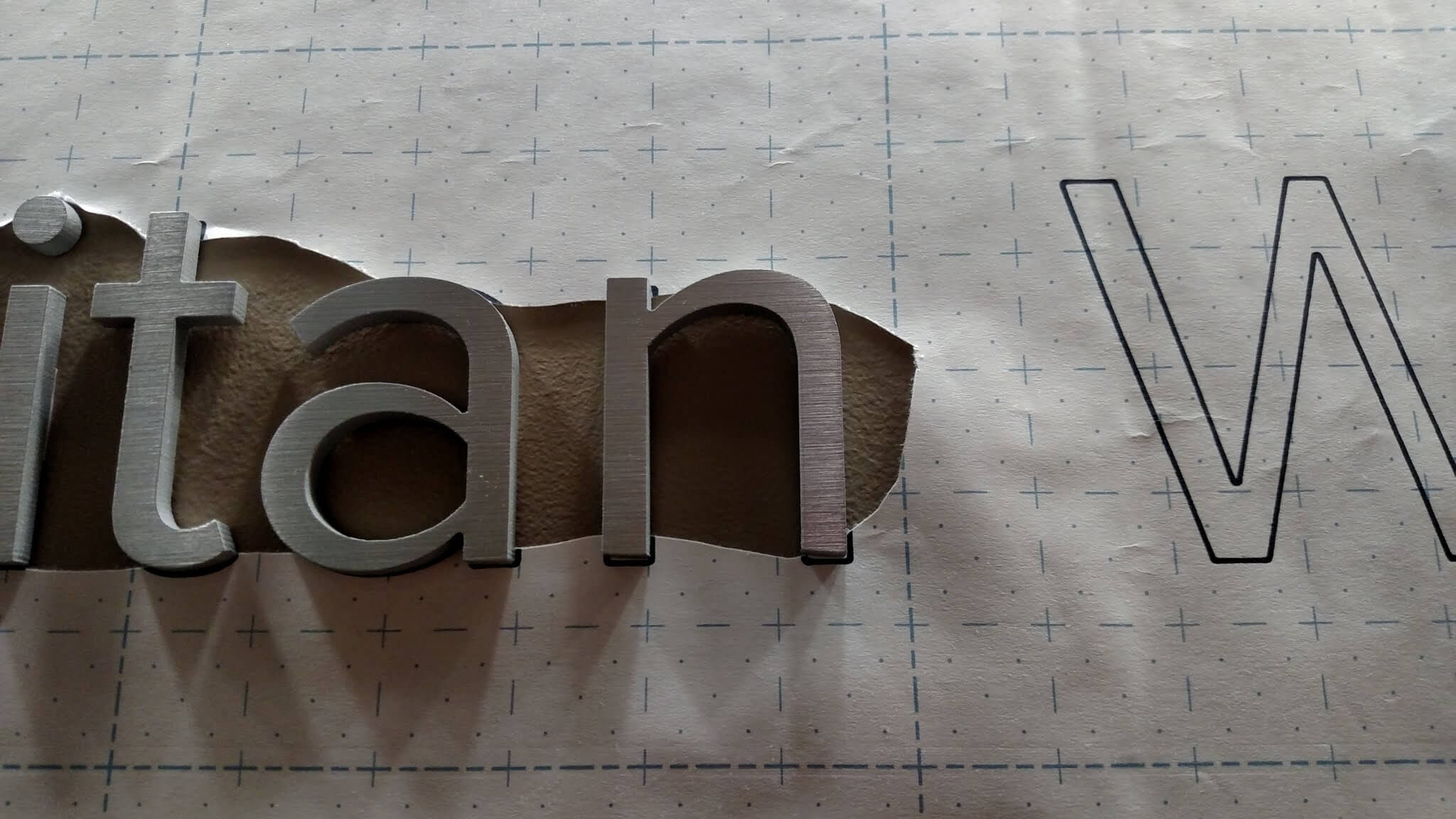
Gold leaf is very delicate, and a mere touch can tear it. For this reason, sign makers and glass artists use soft tools that move the leaf without touching it by hand. They work slowly and with great care.
Most people see it on signs and windows. Because it catches the light and adds depth, a simple sign becomes a statement, and a pane of glass becomes a canvas for radiance.
What is gilding?
Gilding is an ancient art. It means applying a thin layer of gold, or another metal leaf, to a surface. For example, people have gilded everything from old manuscripts and buildings to modern artwork and signs. Gilding works on wood, metal, glass, and ceramics, and it gives each one a rich, opulent finish.
On wood, we first prepare the surface with TotalBoat Lust marine varnish and light sanding. Next, we apply an adhesive called size. Then we lay the leaf onto the size before it dries completely.
A seamless finish
Once the leaf is in place, we polish it to get a smooth, reflective finish. Gold is the most traditional and popular choice for gilding. However, craftsmen also use silver, copper, and aluminum leaf to create different effects and colors. As a result, gilding has lasting appeal, because it gives objects a sense of permanence and value.
Brendon J. Brandon, the master gilder and brush artist who founded Designs & Signs, demonstrates gilding on a wood sign in the video below.
Gold leaf compared to gold paint
Gold paint is a binder that holds tiny metallic flakes. Leaf, on the other hand, is a solid sheet of real metal. Because of this, leaf reflects light like a mirror, and paint looks softer and flatter. In addition, leaf costs more, and it takes more time to apply. For this reason, many customers choose it for the one place where they want the sign to shine, such as a boat name, a house number, or a business logo.
Where we use gold leaf
We use gold on a wide range of projects. On signs, we gild carved letters, and we also gild the raised letters on sandblasted signs. Glass is another favorite surface, where we gild window lettering, transom numbers, and logos. Boats are a third, and there we gild transoms, quarterboards, and life rings. Because each surface needs its own preparation, we plan every job before we begin.
Here are a few examples of our gilded work:
- Custom Carved Quarterboards
- Golden House Numbers
- Gold Address Numbers – 1204
- Glass Gilding – Cafe Normandie
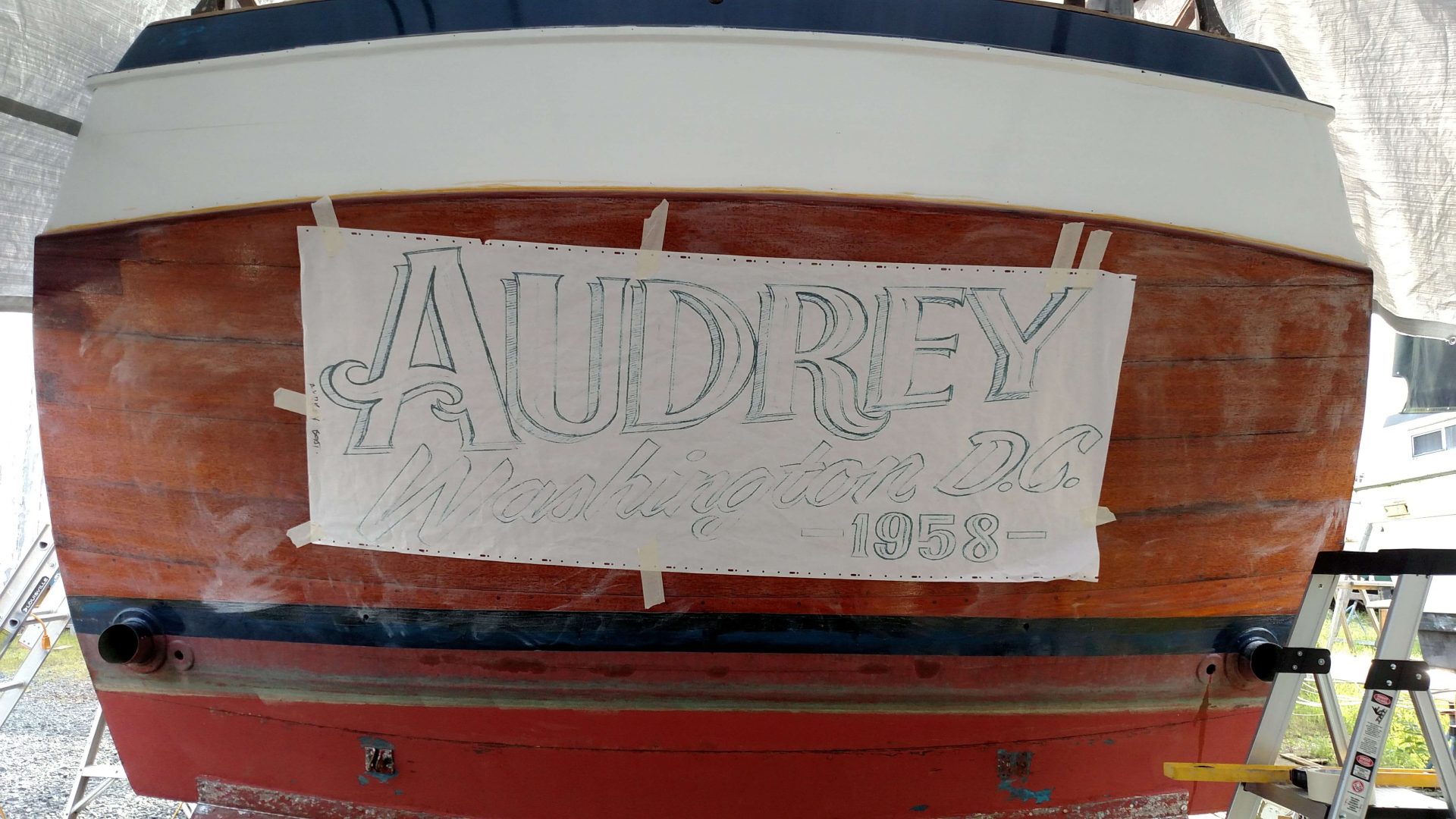
- Audrey Yacht Lettering
Gold leaf boat lettering
Hand-applied leaf lettering has a special place in maritime tradition. It is a gilding tradition that has lasted for centuries. A gilded name on your yacht’s transom adds a touch of elegance. For those with fishing boats, bold, customized names and graphics in gold can set a vessel apart. For fans of classic wooden boats, traditional 23 karat gold gives the boat’s name a timeless beauty.
Applying leaf to boats
First, we create the outline of the lettering on the transom of the boat. We use patterns or stencils to place it accurately. Next, we apply the size and give it time to dry. Then we lay the gold quickly, before the size dries completely. Timing is critical at this step. If we apply the leaf too soon, it sinks and loses its luster. If we apply it too late, the size is too dry, and the leaf falls off.
Finally, we detail the letters with outlines and shading. This makes the lettering stand out against the background, and it gives your boat name more impact.
Caring for gilded surfaces
Gilded surfaces are easy to care for. Indoors, they can last for decades. Outdoors, a protective finish helps them last for many years, so please keep that finish in good shape. To clean a gilded surface, use a soft, damp cloth. Instead of scrubbing, wipe gently, and avoid harsh cleaners. If a surface ever needs attention, you can contact us, and we will tell you what to do.
Want gilded lettering for your boat or business? The quickest way to start is to send us an email. You can also reach us at (410) 798-5115.